
Starting your blog is one of the most effective ways to share your ideas, expertise, life experiences, and interests with the world. Besides this, you can make money from it. However, if you look into the stats about blogging, there are about 80% of blogs that fail, and only 20% make it a long-term journey.
Why do so many blogs not succeed? This is the question that might arise in your mind. The reason is that many people get blogging wrong; they assume it’s just buying a domain, writing posts, publishing them, and waiting for millions of visitors to come. But the reality tells a different story.
It demands understanding fundamentals:
Choosing the right niche.
Creating useful content.
Implementing SEO strategies,
Consistently interacting with your audience.
In this blog, we’re going to explain how to start a blog in a step-by-step guide. After reading this post and following its guidelines, you can be among the bloggers who succeed.
Before delving into the “How to start a blog” section, let’s look at the “Why”. Starting a blog benefits you in different ways:
Source of Passive Income: Your blogging site can generate passive income over time. If your blog gets ranked on Google and gains a sufficient audience, you can monetize it through advertising, sponsorships, affiliate marketing, etc.
Build Online Authority: With your blog, you can share your knowledge and insights with others. This can position you as a credible authority in your niche.
Grow a Community: Your blog can help to connect with like-minded people around the world. You can interact with them through comments, emails, and more.
Writing/Communication Skills: Writing blogs makes you an expert in organizing thoughts clearly, so your writing skills will improve over time. It helps you become a confident and persuasive communicator.
Promote Your Business: If you run any business, your blog posts will serve as a cornerstone of your content marketing. You can guide readers about your products or services and turn them into loyal customers.
And so on…
Below is the detailed elaboration of “How to start a blog” in a step-by-step process:
Before creating your blogging site, you should take some time to decide what you’ll be writing about and what your purpose is. Keep in mind that a successful blog begins with clear goals and a well-defined niche.
Determine whether your blogging goal is to;
Share your knowledge
Build a strong personal brand
Effectively promote your products or services
Generate income
Having a clear purpose and direction will assist you in creating content that will really drive the right audience to your site.
After deciding on the goals, you should also specify the blogging niche. It is a fundamental step that should be taken very carefully. Determine the topics you find interesting. That could be about travelling, food, parenting, healthcare, or other topics.
Select a niche you are passionate about writing in. This will enable you to constantly create blog posts without losing interest.
We also suggest considering your expertise, hobbies, or subjects that you enjoy learning about.
Ensure that you have proper knowledge and expertise in the niche so that you can provide valuable information.
Pick the niche that is in demand, for which people are searching. For this, online tools like AnswerThePublic, Keyword Planner, Ubersuggest, etc., can help.
Last but not least, the tip is to analyze the competition. For this, we suggest choosing a narrow niche, as it has low competition compared to a broad niche.
Note: You should keep in mind that the niche and goals of your blog can evolve with time. The key is to begin with a topic you are passionate about and a clear purpose.
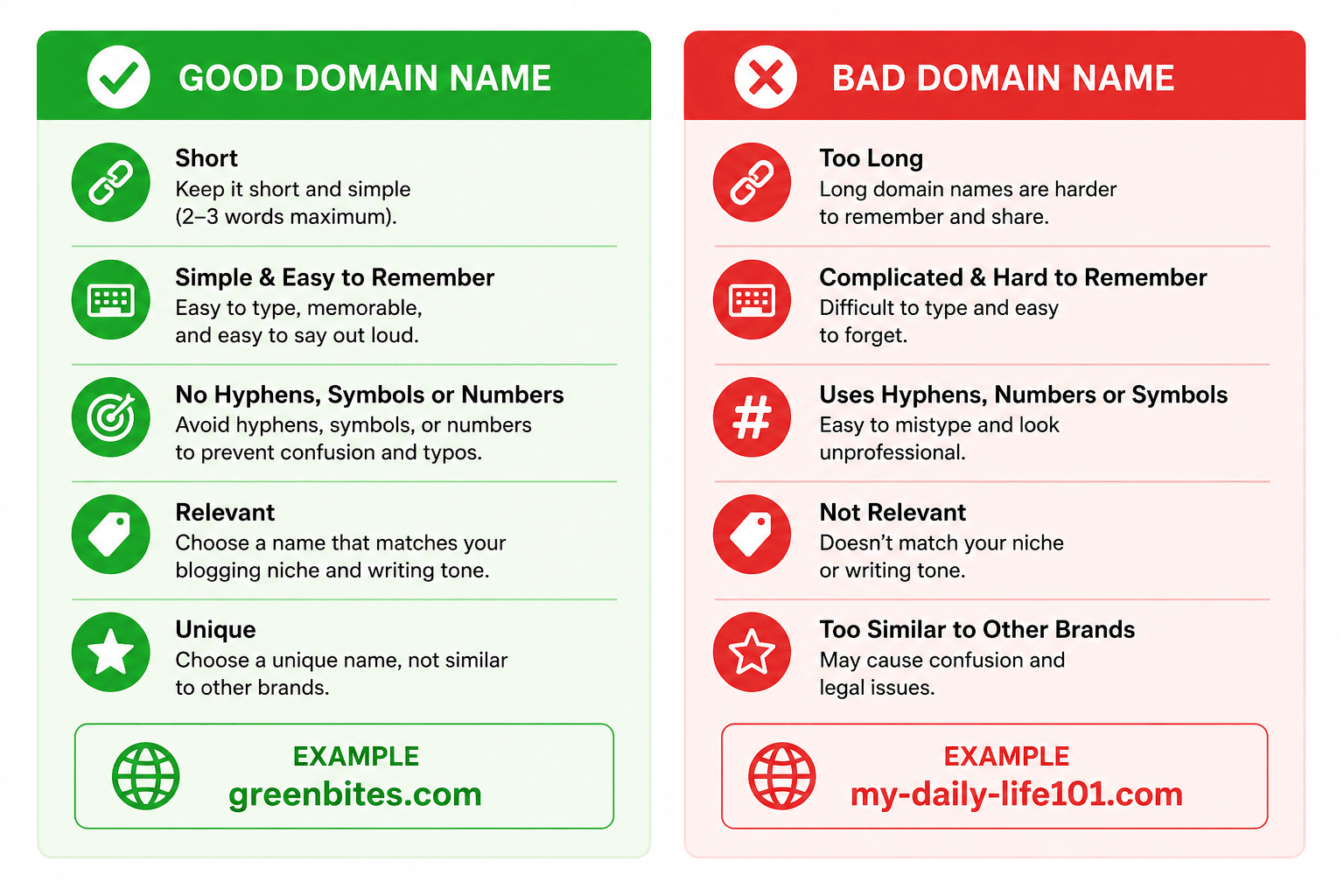
The second step in your blogging journey is to pick a domain name such as yourblog.com. A domain name is your blog’s online address and the first thing that readers notice. So, choose a name carefully that perfectly captures your brand and tells people exactly what your blog is about before they even open it.
Prefer a short domain name. You should aim for two to three words maximum.
We recommend a simple and descriptive name that is easier to type, memorable, and convenient to say out loud.
Avoid using hyphens, symbols, or numbers in your domain name, like my-daily-life101.com. Such types of names are confusing and often lead to typos.
Choose a name that is relevant to your blogging niche and writing tone.
Don’t use names that are similar to or close to other brands; instead, choose a unique one.
Once you’ve shortlisted a few domain name ideas, check that it is not already registered before you buy them. For this, get help from a domain registrar such as NameCheap, GoDaddy, Hostinger, or others.
When your preferred name is available, the next step is to register it as soon as possible on any of the previously mentioned platforms. After domain registration, it’s time to look for a reliable blog host. It is a platform where your blog’s entire content is stored. So, to run your blog online, it is a must to host it.
We suggest purchasing hosting that helps your blog load faster, stay online consistently, and remain protected from all kinds of security threats. At the start, bloggers usually opt for shared hosting.
Once your domain and hosting are connected, the next thing you need is a content management system or blogging platform to customize or design your website. One of the most popular CMS is WordPress.org, which powers nearly 40% of all sites. It is fully customizable, easy to use, and free.
Install WordPress through your hosting provider; most web hosts provide a “One-Click WordPress Install” button, helping you set up the process quickly. Now, start customizing and designing your blog;
Choose Theme
In WordPress, the layout of your site is known as a “Theme”. The theme controls how your blogging site appears to visitors. There are thousands of themes offered by WordPress. Just go to Appearance and click the Theme. Then, search for a light, fast, and easily customizable theme.
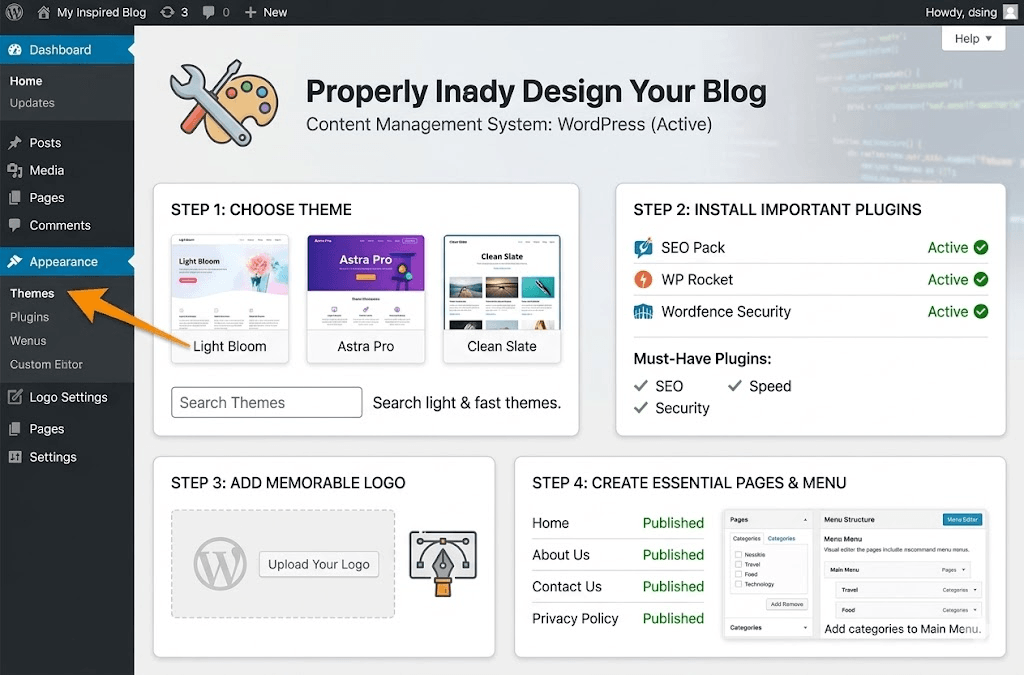
Install Important Plugins
WordPress plugins help you easily add extra features to your blog and manage the whole site easily. Install useful plugins for SEO, speed optimization, and security enhancement. Additionally, check the list of plugins for the blogging site.
Add a memorable Logo
You should create a logo that reflects your blog’s niche and matches its overall theme and branding.
Create Essential Pages
The next thing is to add important pages to your blog, including Home Page, About Us, Privacy Policy, Contact Us, and Terms & Conditions. Besides, these add a main menu to the site, where you should create categories.
And so on…
Once your blogging site is set up and customized, the next step is to start writing your blog content. From this stage, your blog will start getting in shape and providing value to the audience. Your blog posts are the most important part of the site, so they should be informative, compelling, and relevant to your niche.
Plan Your Topics
Before you start blog writing, search for topic ideas relevant to your niche. Know about the needs, pain points, preferences, and most frequently asked queries from your audience. Then, make a list of the topic ideas you discover through this research.
Conduct Keyword Research
Do comprehensive keyword research via online tools like Ahrefs, Semrush, etc., or go to Google Trends to check which topics or queries have a higher potential of getting traffic from search engines.
Write High-Value Content
You should write blog posts that provide true value to the readers. We suggest you use a consistent tone, simple wording, engaging language, and explain your concepts clearly. One recommended approach to ensure your writing is engaging and easier to understand is to rephrase your draft with the Editpad AI Paraphraser.
Do Proper Formatting
Avoid writing long blocks of paragraphs. Instead, you should divide the whole content into headings, subheadings, short paragraphs (for a blog, aim for 2 to 4 sentences per paragraph), numbered lists, and bullet points.
Add Relevant Visuals
To make your blog posts more compelling and digestible for readers, it is important to add relevant images, screenshots, infographics, or charts. These elements will improve the reading experience of the audience.
Publish Posts Regularly
Publishing posts constantly is one of the significant parts of blogging. You should create a content calendar and posting schedule in advance and stick to it.
Writing high-quality blog posts is only half the job. Before publishing your posts, it is important to make them SEO optimized so that they can get better visibility against relevant queries or keywords in the search engines. In other words, proper SEO will help your blog reach the right audience and achieve higher rankings in SERPs (search engine results pages).
Below we listed some useful tips following which you can better optimize your blog content;
Naturally Adjust Keywords
Decide what the focus keyword or primary keyword of your blog is and include it in the important sections, such as the blog title, meta-description, introduction, headings, and conclusion. Similarly, adjust some LSI Keywords naturally throughout the content. However, avoid keyword stuffing as it can negatively impact the readability and naturalness of your content.
Optimize Title and Meta-Description
The title and meta-description are among the first things that people read about your blog post. These elements play a significant role in increasing CTR (click-through rate). So, try to make them catchy and clear to read. The optimal length of a title is between 50 and 60 characters, and of a meta-description is between 120 and 160 characters.
Try Editpad Title Generator and Meta-Description Generator to instantly get optimized titles and meta-descriptions within seconds.
Add SEO Friendly Headings
You should use proper headings in the sequence of H1>H2>H3… and so on. It will make your content organized and easier to understand for both users and search engines.
Optimize Images & Add Alt-Tags
Compress the images to make them load faster. Plus, for each image, write Alt text to help search engines understand what the image is about.
Add Internal & External Links
Properly link your new post to already published relevant blog posts on your site. Additionally, add some external links to trusted and relevant sources where needed. This practice will help keep your readers engaged and assist search engines in better understanding the intent.
Ensure Originality of Your Blog Content
Search Engines prioritize uniqueness and penalize duplicate content. So, check your content’s originality using Editpad’s Plagiarism Checker tool.
Actively promoting your content is essential to reach a larger audience. Effective promotion can result in multiple benefits, such as an increase in traffic, attraction of new readers, and faster growth of the blog.
Post Your Content Across Social Media Platforms
Today, social media attracts the largest audience online. You should regularly share your posts on popular social media platforms like Facebook, Instagram, TikTok, etc. There, you should actively engage with your followers and encourage them to like, comment, and share your post with others.
Publish Guest Posts
Write high-quality guest posts and publish them on reputable websites in your niche. This way, you can reach new audiences, gain more authority, and earn backlinks to your site.
Be Active in Online Communities
Another effective approach is to join forums, Facebook groups, Reddit Communities, Quora Spaces, and other areas where your audience mostly spends time. You should participate in discussions and share your content where they provide genuine help.
Turn Your Blog Content Into Other Formats
You can convert your blog’s content into other formats like infographics, social media posts, videos, or others. Doing so will help you reach people who prefer reading content in different ways.
Once your blog has sufficient traffic and a loyal audience, it’s time to turn your blog into a source of income. There are several ways through which you can monetize your blog.
Displaying Ads
One of the most popular and easiest ways is to display ads on your blog. You just need to join an advertising network that will place relevant ads on your blog, and you’ll earn revenue whenever visitors view or click on them.
Affiliate Marketing
In this approach, you’ll promote relevant products or services by adding their links. Whenever someone purchases via your referral link, you’ll get a commission from it.
Monetize With Sponsored Posts
When your blog gains popularity, businesses may approach you to write sponsored content on your website. In return, they’ll pay you for mentioning their services, products, or brand.
Selling Your Own Services
If you have any specialized skills, like content writing, graphic design, consulting, web development, or any other, you can attract clients via the blog.
And so on….
Starting your blog may seem challenging at first, but with the right approach, this process becomes much easier. By selecting the right blogging niche, writing valuable content, optimizing it for SEO, staying consistent, and promoting your content, you can make your blog successful over time. Now, it’s your turn to implement these strategies and focus on providing genuine value to your readers.








 Editpad
 Chat
Chat
 Premium